Solar designed and installed by your local NETCC-approved team
Home and business battery storage, with rebates and finance sorted for you
Licensed electrical work across the Hunter
Areas we service Newcastle · Lake Macquarie · Hunter
Solar designed and installed by your local NETCC-approved team
Home and business battery storage, with rebates and finance sorted for you
Licensed electrical work across the Hunter
Store the power your panels make by day and use it at night, so you buy far less from the grid and keep the lights on when it goes down. Designed, installed and signed off by one local, licensed team.
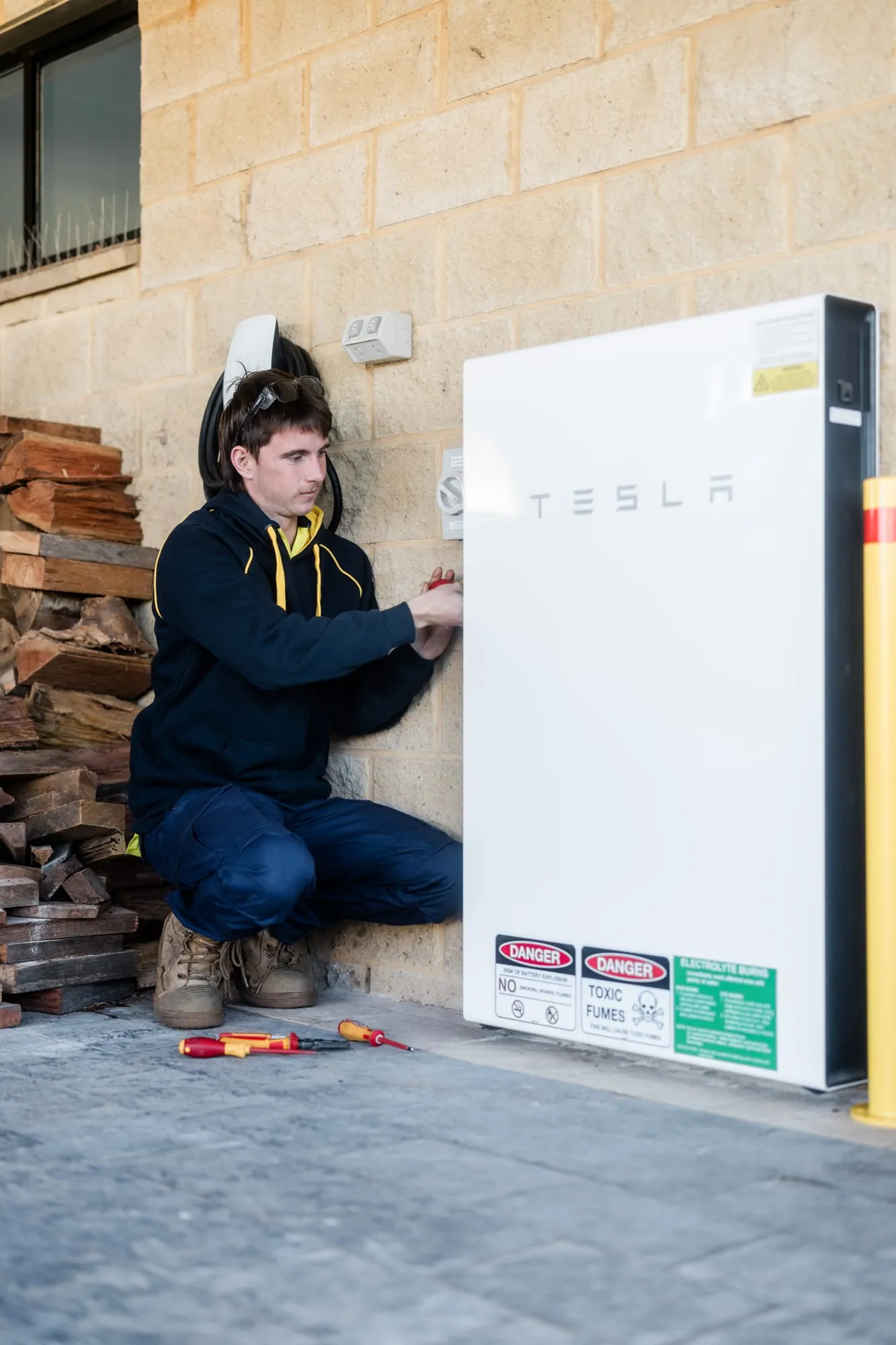
A solar battery captures the power your panels generate through the day and holds it until you need it, so instead of exporting cheap solar and buying it back at full price after dark, you run your home on your own energy. For most Newcastle and Hunter households, it’s one of the biggest steps toward lower bills and greater energy independence.
Feed-in tariffs have fallen a long way, so the surplus solar you generate through the day is now worth far more stored than sold back to the grid. A home battery lets you spend that power in the evening peak, when you’d otherwise be paying the highest grid rates. Because we’re a full-service solar and licensed electrical business, the same local team sizes your battery, handles any switchboard or wiring work it needs and completes the electrical sign-off, one accountable team from quote to switch-on.
Use more of your own solar and draw less from the grid, especially through the evening peak when rates are highest.
Stop giving away cheap daytime solar and buying it back expensive after dark. A well-sized battery lifts how much of your solar you actually use.
With the right hardware, keep essential circuits running when the grid goes down: lights, the fridge, internet and a few power points.
Lean on the grid less, and on rising retail prices less, by running your home on clean energy you have already generated.
A battery pairs with a fresh solar system or an existing one, so it works whether you are starting out or already have panels on the roof.
The federal battery rebate and a NSW battery incentive both come off your quoted price, and eligible households can put the balance on a $15,000 interest-free loan.
Any savings depend on your usage, your system size and your tariff, so we’ll only ever quote figures based on your actual bills, never a headline number.
The cycle is simple. Most homes stay connected to the grid and simply lean on it less. Only off-grid systems cut the connection entirely, and they need much larger storage.
Through the day your panels make more power than the house is using.
Instead of exporting that surplus cheaply, it charges the battery.
At night, or whenever the panels can’t keep up, the battery runs the house.
The grid stays connected and simply tops up for the times the battery runs low.
You’ll hear kWh (capacity), how much energy the battery holds, or how long it can run your home, and kW (output), how much it can power at once. Usable capacity is the portion you can actually draw on day to day. You don’t need to master the jargon; getting the size right is what matters, and that’s where we come in.
Almost every modern home battery uses lithium-ion. It’s compact, efficient and holds its usable capacity well over years of daily cycling. Older lead-acid and specialist flow batteries are rare in new home installs. For nearly every household we quote, a quality lithium-ion system is the right fit, and we’ll recommend one that suits your home and budget.
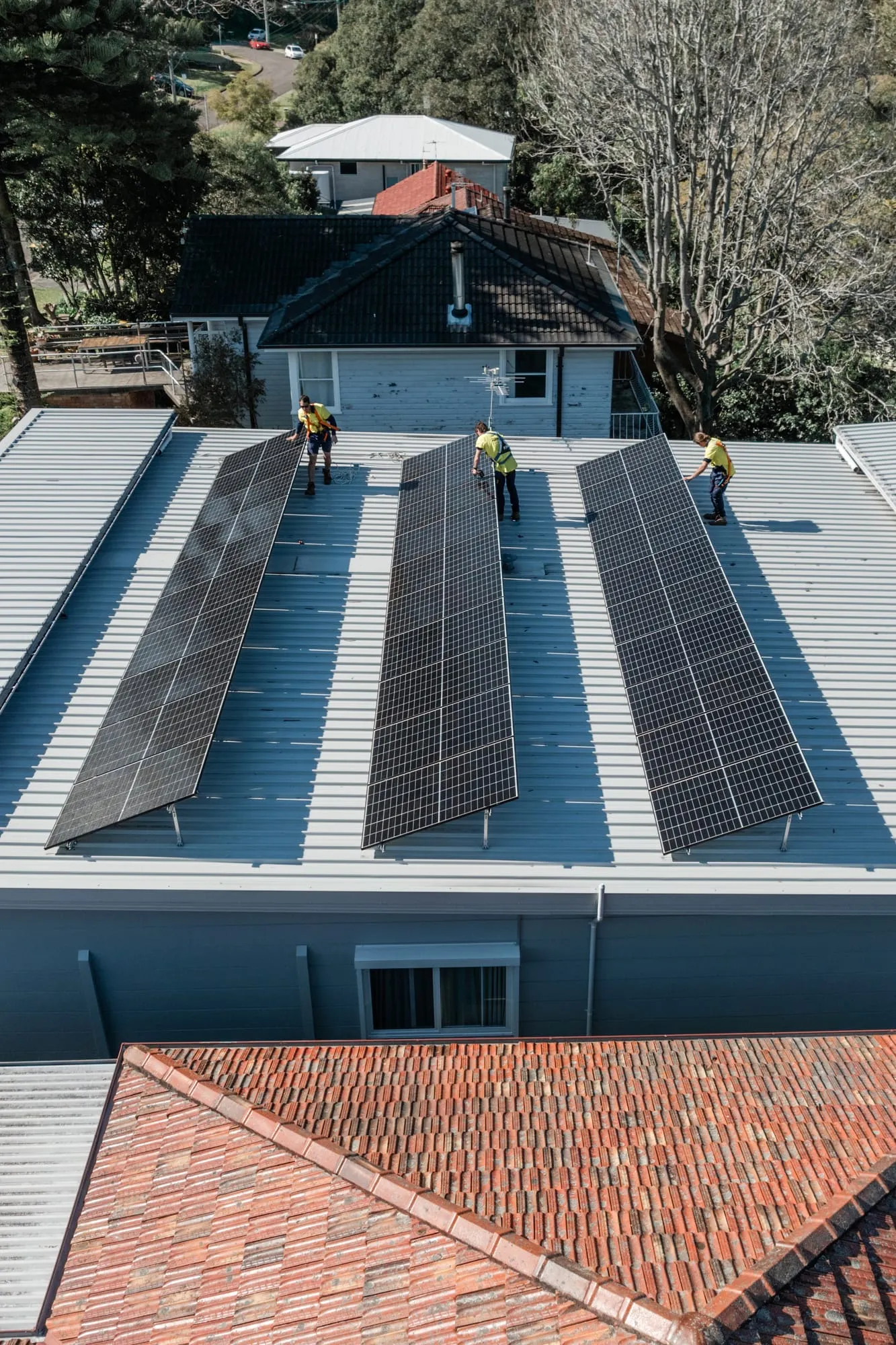
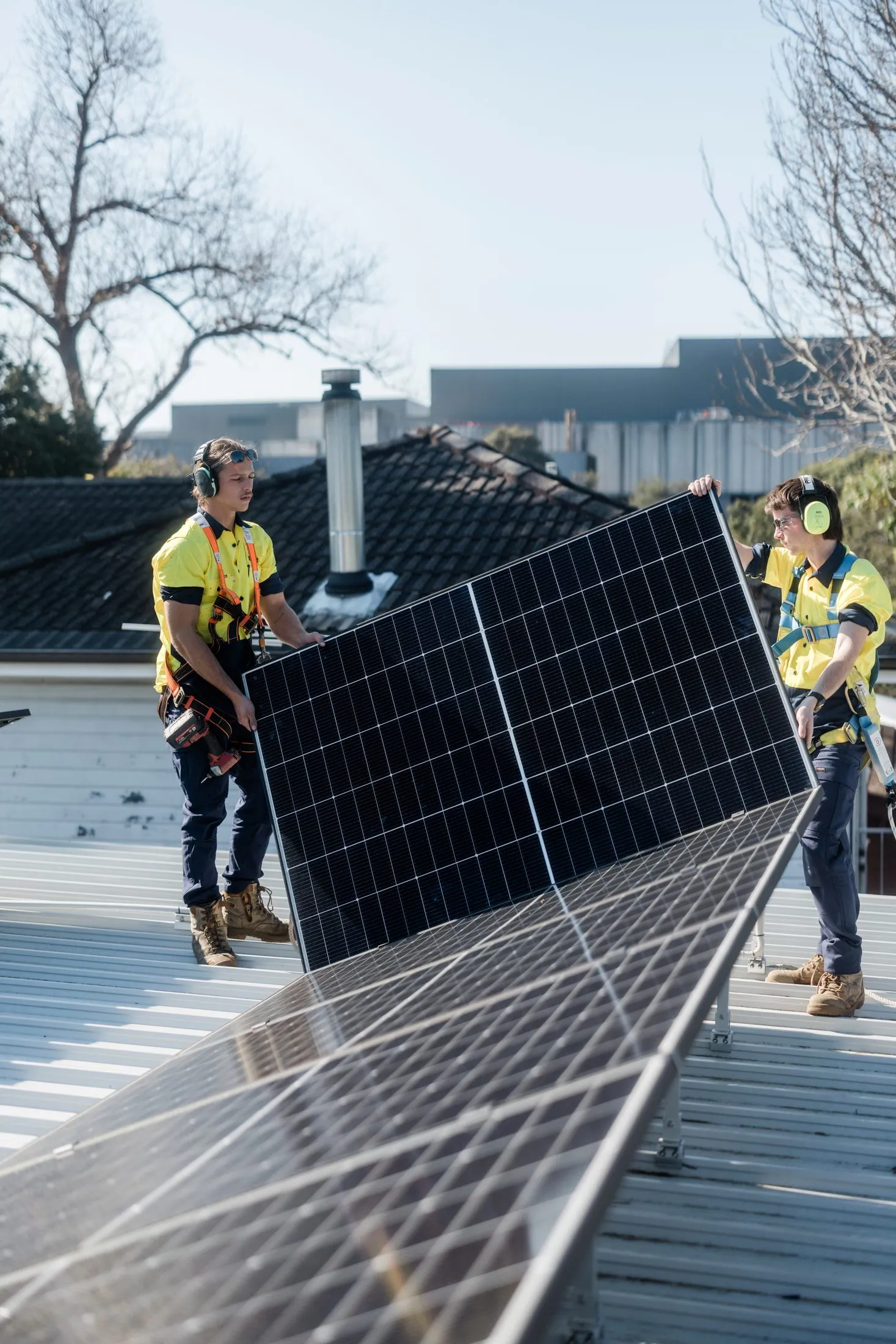
If you don’t have solar yet, installing panels and a battery together is the best-value route. Everything is matched and designed to work from day one. Already have solar? In most cases you can add a battery without replacing your panels.
For a retrofit we check your existing solar inverter and setup, then recommend the right approach, a hybrid inverter that handles both solar and storage, or an AC-coupled battery that runs off its own inverter alongside your existing one. Either way your rooftop system keeps working and gains storage.
A standard grid-connected solar system shuts off in a blackout for safety, even in daylight, so panels alone won’t keep your lights on. A battery with backup capability can island your home and keep essential circuits running through a power outage: lights, the fridge, the internet and a few power points.
Not every battery provides backup, and how long it lasts comes down to its size and what you’re running. Power the essentials and it stretches much further than the whole house. If blackout cover matters to you, tell us up front and we’ll design for it.
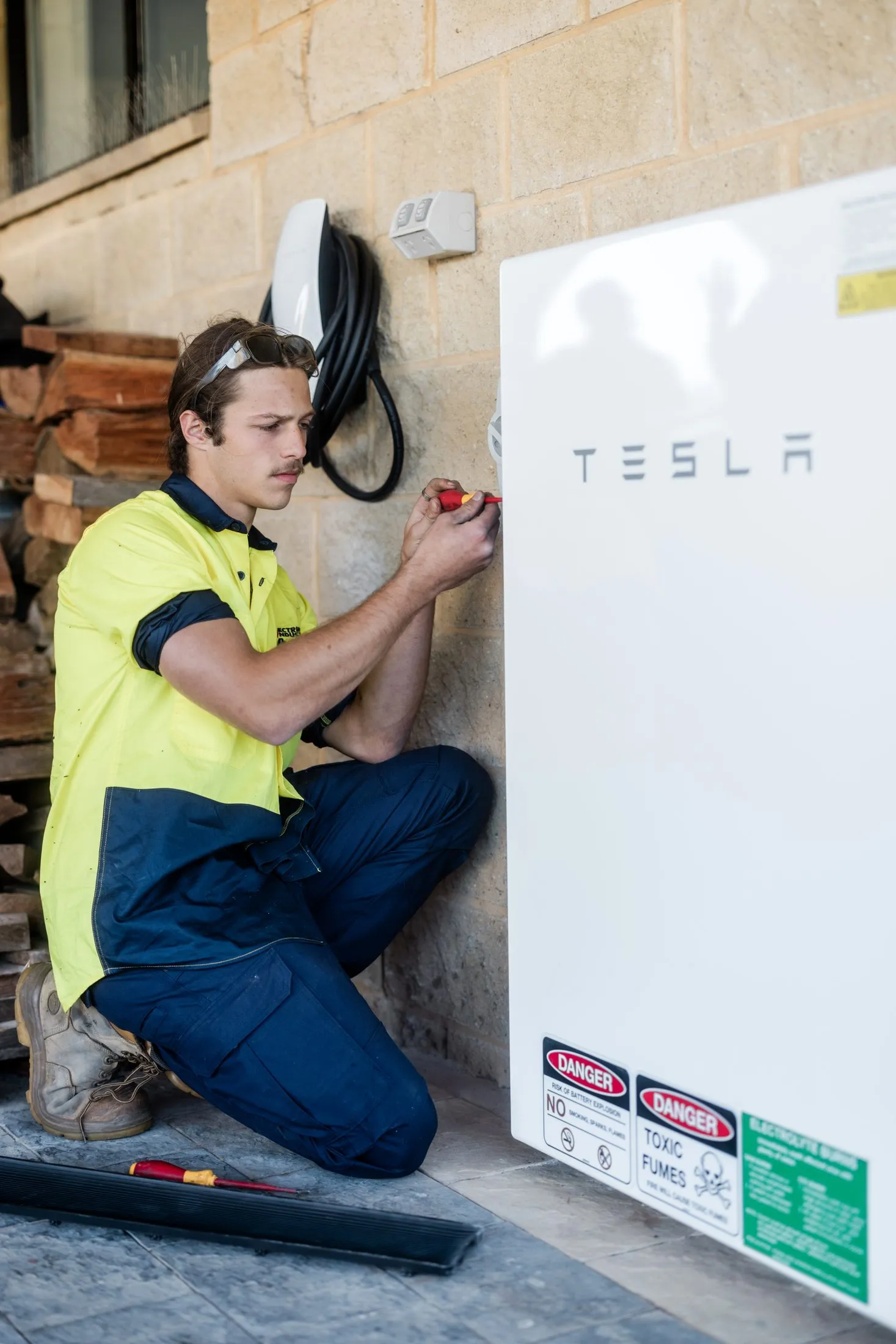
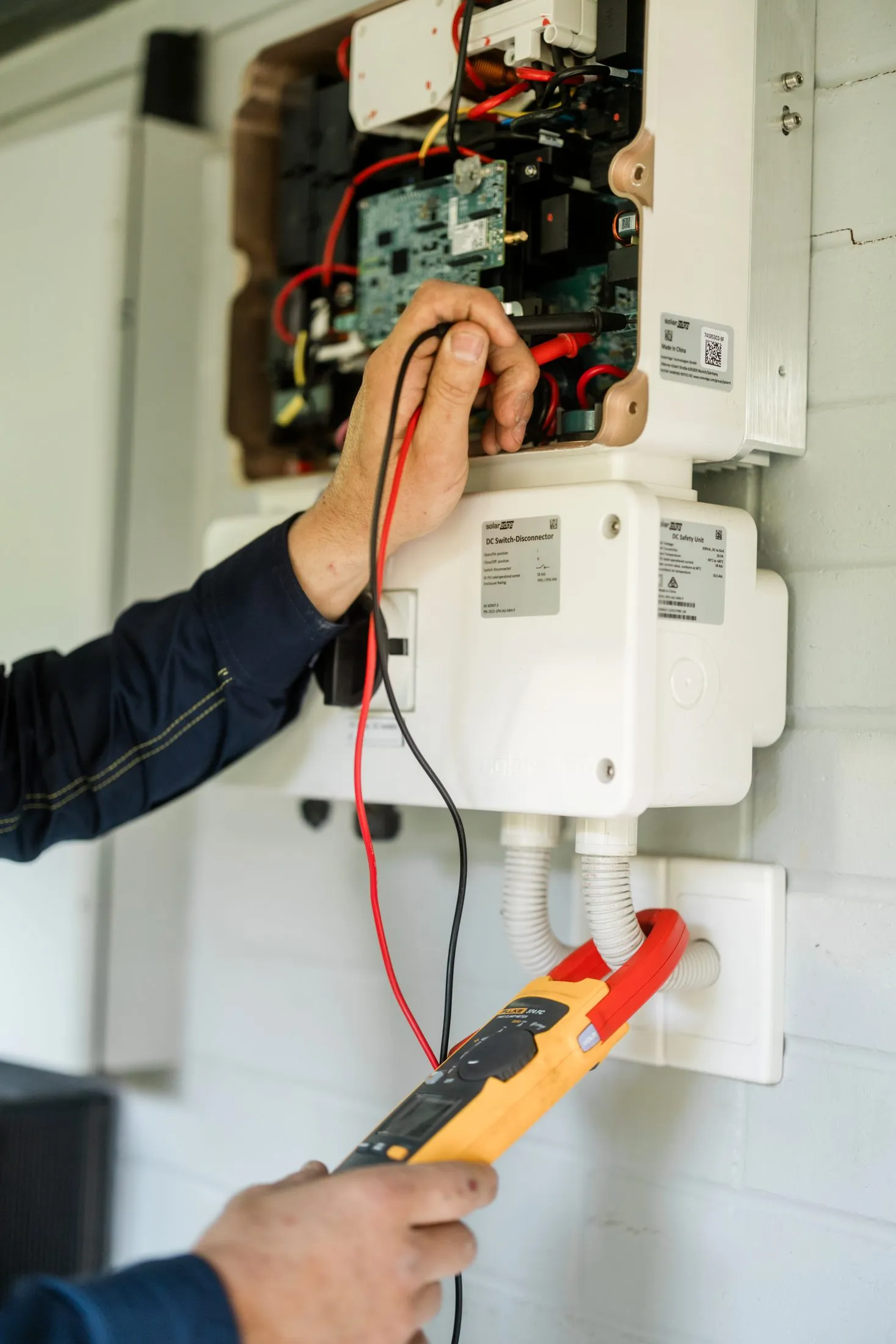
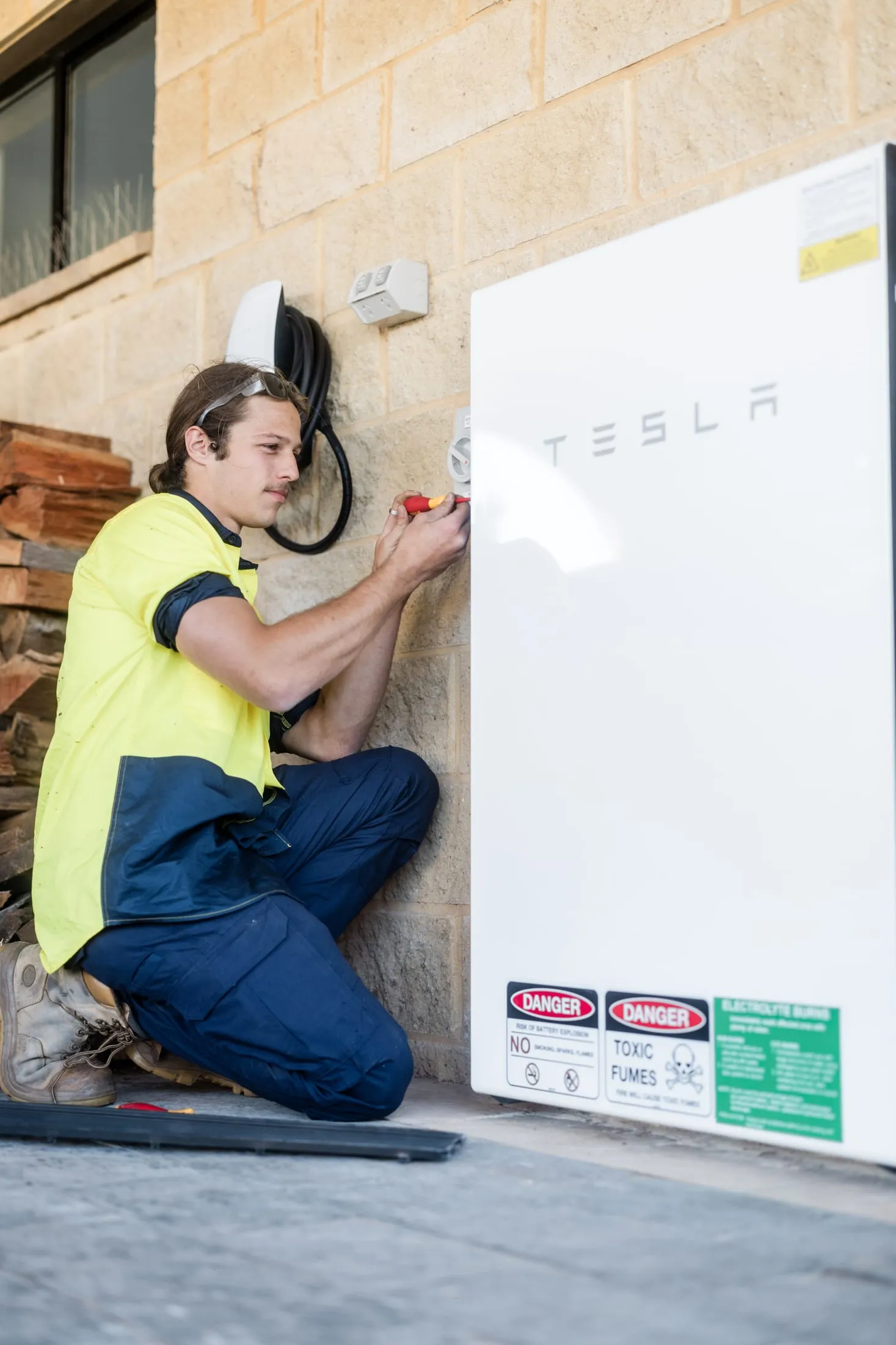
Most battery installs need electrical work, which is where a solar-only installer has to bring in a separate electrician. Home batteries also have to be fitted by accredited installers to be safe and to qualify for rebates, so the credentials behind your install matter.
We’re solar and licensed electrical under one roof, so the same local team sizes the battery, does any mains or switchboard work it needs, and signs off the electrical side. One team, one point of accountability, from the first quote to switch-on.
The honest answer is that it depends on the size of the battery and the work your install needs. Payback improves the more of your own solar you store and use, and the more support you can access. Rather than quote a figure that won’t match your home, here’s what actually drives the cost.
There’s federal and NSW support that can reduce the upfront cost, including the federal Cheaper Home Batteries Program, and only batteries with Clean Energy Council accreditation qualify. We keep the current detail on one page rather than repeat the fine print here. See our rebates and finance guide. When we quote, we apply the rebates you’re eligible for so you see the real out-of-pocket cost.
And if that figure is still more than you want to find up front, eligible NSW households can cover the balance with the $15,000 interest-free Home Energy Saver loan: zero interest over up to 10 years, and we’re an approved supplier for it.
A battery is a serious purchase and it needs to be wired in safely. Here’s what you get with a local, family-run crew that lives and dies by its reputation.
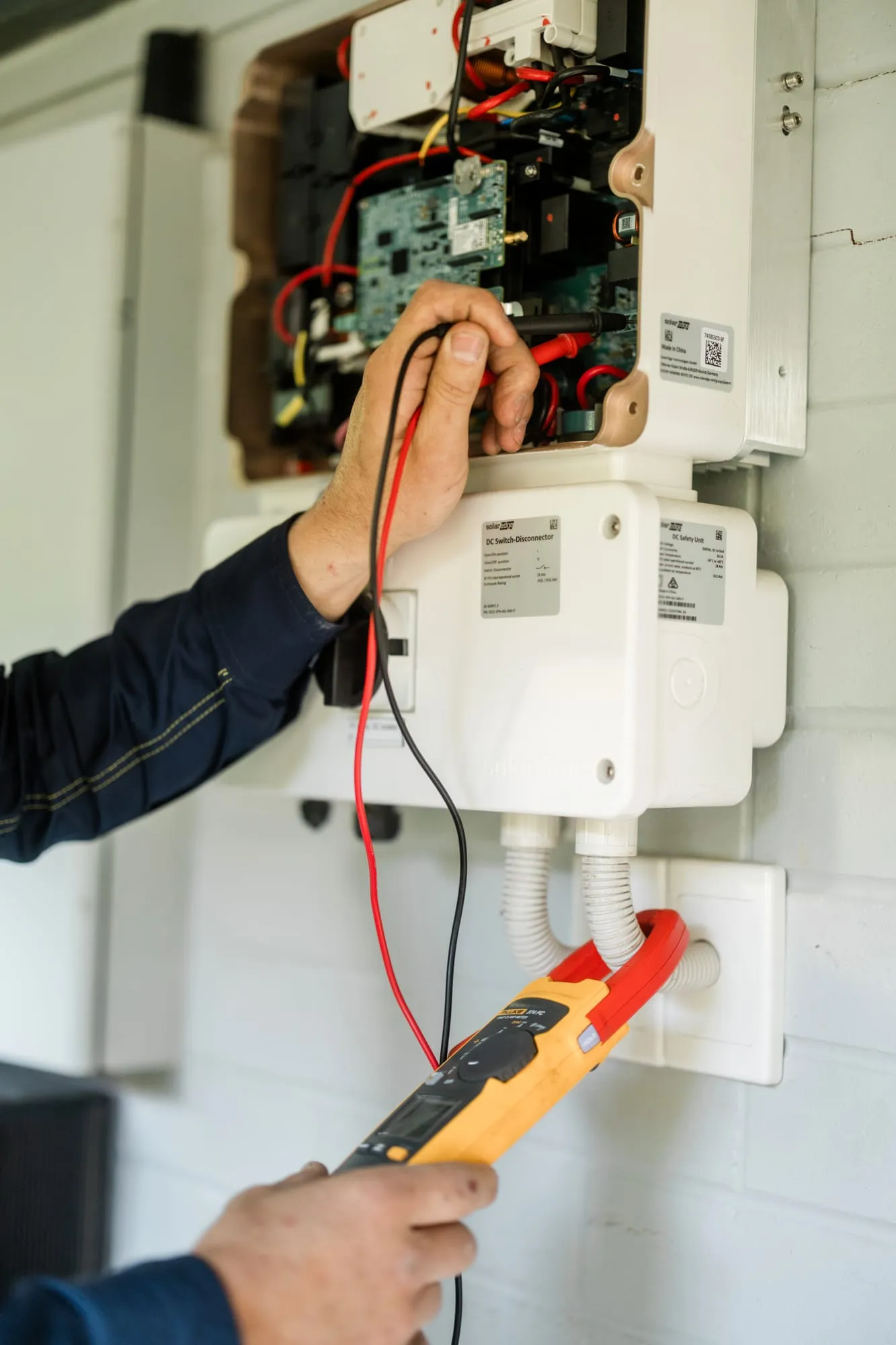
Most battery installs need electrical work: a switchboard upgrade, meter or wiring changes. We handle the battery and the electrical side ourselves, rather than bringing in a separate sparky.
We size the battery to your actual evening and overnight usage, so you buy the right amount of storage and nothing you won’t use.
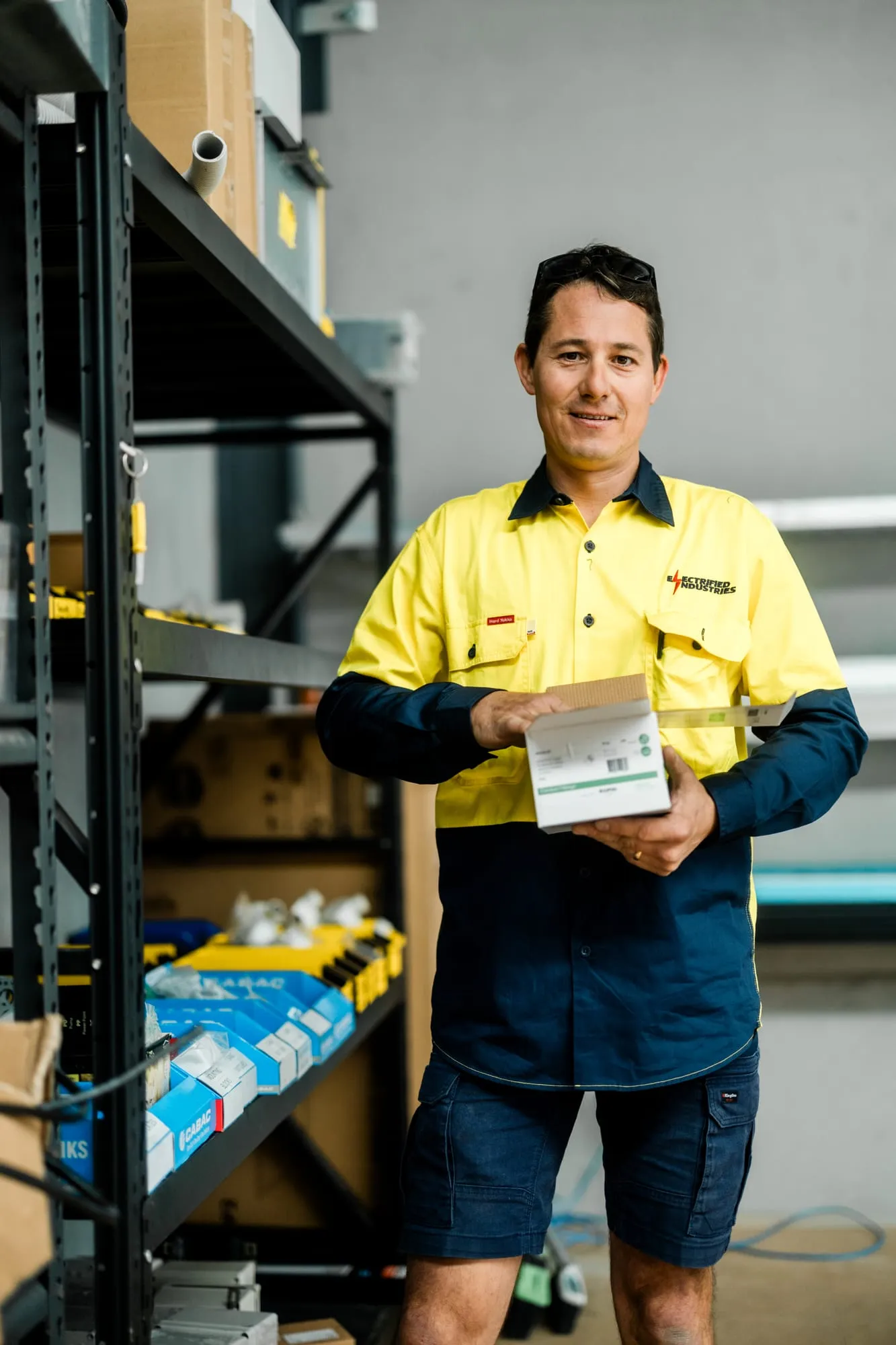
A crew you can reach and hold to their word, not a call centre interstate. We serve Newcastle, Lake Macquarie and the wider Hunter.
Home batteries must be fitted by accredited installers to be safe and to qualify for rebates. One local team sizes it, wires it and signs off the electrical side.
Talk to a licensed local electrician, no obligation, straight answers.
For many households, yes, particularly now that feed-in tariffs are low, so storing your solar is worth more than exporting it. The value comes from using more of your own energy and cutting your evening grid use, and rebates can shorten the payback. Whether it stacks up for your home depends on your usage and system, which is why we quote off your actual electricity bills.
Match the battery’s usable capacity to your evening and overnight usage and your solar system size. Too small and you’re back on the grid overnight; too large and you pay for capacity you never fill. We size it off your real usage so you get the right amount of storage.
In most cases, yes. We check your solar inverter and current setup and recommend the right approach, usually a hybrid inverter, or an AC-coupled battery on its own inverter alongside your existing one. Book an assessment and we’ll confirm what suits your system.
It depends on the battery size and how much you’re running. Powering essentials like lights, the fridge and internet lasts much longer than running the whole house. Not every battery provides backup, so tell us if that matters and we’ll factor it into the design.
Almost all modern home batteries use lithium-ion, because it’s compact, efficient and holds its capacity well over years of daily cycling. Older lead-acid and specialist flow batteries are rarely used in standard homes now. We’ll talk through the options and recommend a battery that fits your home, budget and the way you use power.
There’s federal and NSW support that can reduce the upfront cost, including the federal Cheaper Home Batteries Program. We keep the current detail on our rebates and finance guide, and we apply what you’re eligible for when we quote.
Yes. We’re an approved supplier for the NSW Government’s Home Energy Saver program, which gives eligible households an interest-free loan of up to $15,000 over up to 10 years. Any rebates come off the price first and the loan covers the balance, so you’re financing the post-rebate figure rather than the sticker price.
A quality lithium-ion battery is typically covered by a 10–15 year warranty, usually with a guaranteed minimum capacity retained at the end of the term. We’ll walk you through the product and workmanship warranties before you commit.
Newcastle, Lake Macquarie and the wider Hunter region.
Obligation-free quotes across Newcastle, Lake Macquarie & the Hunter.